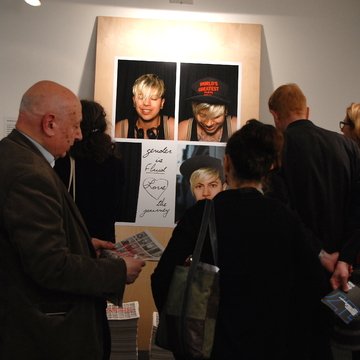
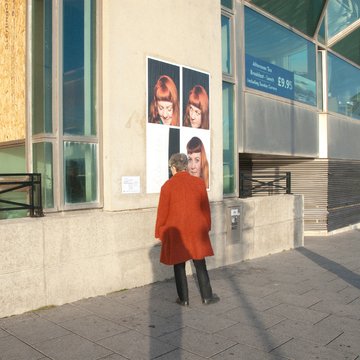
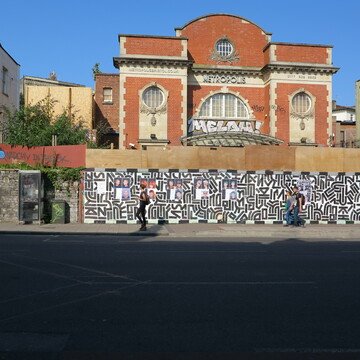
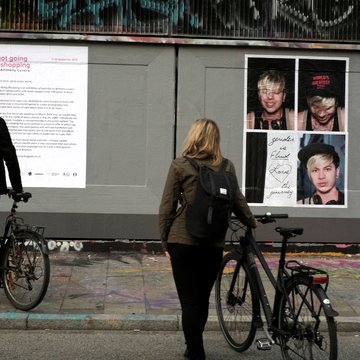
Interview with Ludo Foster for Queer in Brighton Oral History Project 2012-2014 (12 Dec. 2012), interviewed by Heather.
Short Q&A with Ludo Foster about identity, origin, labels and social spheres. Interview with gender-fluid, , reflecting on identity, spaces. Ludo speaks about gender identity, gender fluidity and of being a transmasculine person of colour living in Brighton in 2010s.
Discussion about reasons for relocating to Brighton, impressions before and after moving, day/nightlife in Brighton and academic life at University of Sussex.
Discussion about gender expression, gendered assumptions, being transmasculine and transitioning at work and with family.
Discussion about the bureaucracy of transition, trans rites of passage and milestones, and changes to which queer & straight spaces are welcoming or unwelcoming when coming out as transmasculine, ties between lesbian and FTM communities.
Discussion about challenges of dating like pubs/clubs, gender identity, how potential partners perceive you, the safety and separation/privacy of the internet, online dating not being designed for trans people.
Original audio (in two parts), transcript and consent form included.
Snippet from an interview with Rachel Beck. The full interview was part of Queer In Brighton oral history project. A collection of over 100 recordings, documenting queer life in Brighton.
In this interview Rachel describes retaliation against Central Free Church in Brighton that was firebombed due to allowing gay people to meet on the premises.
This snippet is part of a longer interview Roger Nicholls gave to Queer In Brighton oral history project.
Roger describes his experiences as a teacher, and as an activist during the Section 28 era.
Roni is interviewed by Ten Harber. Roni moved to Brighton in 2009 from Rome after previously visiting Brighton Pride. She speaks about the origin of Tramfrau as a response to Brighton’s nightlife being primarily geared towards students. She talks about how an activity space was included in the event to encourage interaction and socialising beyond the dancefloor. She talks about the risks taken to include different types of performance and music and how that has been unappreciated or misunderstood. Feedback is an important part of the process and has shaped how this event has changed over time.
As the night became more successful it moved to a larger venue and some measures were taken to counteract antisocial behaviour, such as through the marketing of the event as well as featuring politics as part of the decor. She speaks further about the sensitivities around the language used to describe and conceptualise the night and how this has evolved alongside the event itself.
Rory Smith is interviewed by David Sheppeard in The Marlborough theatre green room. Rory came to Brighton in 2001 when he was 18 for university. He speaks about other close family members coming out to him before he came out as bisexual, and how it wasn’t until his third year of university that he discovered LGBT nightlife in Brighton. He speaks about being intimidated by the lesbian scene in the mid-2000s and how starting a drag king troupe helped him explore his gender identity. Whilst working for a trans charity he began to be solely referred to as Rory and use he/him pronouns. He speaks about bi erasure in Brighton and how it has been even more of a challenge post-transition
Rory talks about being part of the group that started the Club Wotever events at The West Hill, which was one of the only alternative queer events at the time. The Cowley Club is also mentioned as part of this scene and it’s involvement with Queer Mutiny, an activist group. Rory then became involved in FTM Brighton and notes how a Trans Day of Remembrance became the catalyst for a new wave of local trans activism, including Trans Pride.
"Sarah Sawar is interviewed in a cafe Figaro's (?) cafe in Brighton, she talks about her childhood in Hayward's Heath close to Brighton. Sarah talks about discovering the gay scene in Brighton, first visiting Dr Brighton and the ease of growing up in the gay capital Sarah came out to friends at 14 and family at 21 due to her guardian (her auntie) expressing unhappiness at the possibility. She was disowned for three years after coming out and recently reconciled with her guardian. She talks about her auntie knowing she was gay because she was 'tombiysh' and had the typical gay look. She has a half sister who is also gay, but was brought up separately who she first met when they were 16 in Singapore. They have a close relationship and have similar tasted in music. Sarah talks in more detail about coming out to her sister who pointed out the risk of ending up alone. She talks about thinking about moving back to Singapore, but felt like they missed the UK and their friends.
Sarah talks about training to be a paediatric nurse and her career aspirations.
Tiffany (Tiff) Ansari is interviewed by Ten Harber at The Fountainhead. She came to Brighton from Doncaster to study at Sussex University in 2010. She speaks about having a gay housemate who introduced her to her first LGBT event. She recalls Revenge being a strange first experience and that she now works there. She speaks of the celebrities she has met during her time there, and the performers she has seen. She also speaks about joining the women’s football team and the initiation process it takes to join as a fresher.
Tiff talks about her experience as a volunteer for Switchboard and being a representative at different events. She gives examples of the types of calls received and the challenges of working in the role.
She speaks about her coming out experience while living in Brighton and the discrimination she has faced on nights out.
Jane Traies: on secrets, books, and being whole
Writer, researcher, storyteller and oral historian Jane Traies has been recording the life histories of the oldest generations of lesbians in the UK.
Some of these stories feature in her books The Lives of Older Lesbians: Sexuality, Identity and the Life Course (2016) and Now You See Me (2018).
In November 2021 we had the opportunity and privilege of listening to Jane's story. The story of a journey from secrecy to finding community. Via a very precious copy of Maureen Duffy's "The microcosm".
Recorded remotely on November 18, 2021
Interview by: Roni Guetta and David Sheppeard
Editing and original music by Olive Mondegreen
Janet tells Roni and David which are the objects that would best tell her personal queer story.
Janet Jones grew up in West Yorkshire and lives in Brighton. She is a writer, queer and disability-rights activist, film makers, and all round source of many stories and anecdotes.
In this interview Janet talks about her youth, self-discovery, writing and performing during the AIDS crisis, activism, death, life, and joy!
Recorded on October 20, 2020, on Janet's balcony in Brighton, as part of the My Queer Museum podcast series
Interview by: Roni Guetta and David Sheppeard
Editing and original music by Olive Mondegreen
Juno tells Roni and David which are the objects that would best tell her personal queer story.
Juno Dawson is a best selling novelist, screenwriter, and journalist. She is also a part of the queer cabaret collective known as CLUB SILENCIO. Juno grew up in West Yorkshire, writing imaginary episodes of Doctor Who, today she lives in Brighton.
In this interview Juno talks about teenage crushes, growing up as a queer person, being a writer, gender and fashion.
Recorded on November 3, 2020, at The Spire, Brighton, as part of the My Queer Museum podcast series.
Kathy tells Roni and David which are the objects that would best tell her personal queer story.
Quite literally the queer voice of Brighton, Kathy Caton is broadcaster at BBC and Radio Reverb, as well as a woman pioneering in the world of gin making!
In her interview Kathy talks about the buildings that hold our community together, how we need spaces and places to come together and to thrive.
Recorded on October 19, 2020, at The Spire, Brighton, as part of the My Queer Museum podcast
Interview by: Roni Guetta and David Sheppeard
Editing and original music by Olive Mondegreen
Kevin John Dodd
When I think of Kevin John Dodd, the memory that ignites is the one of him emerging from the Pepper-pot toilets by Queens Park one summer dressed in a T shirt and shorts. When he saw me walking into the park, his face broke into a broad grin and we both burst out laughing, because he knew that I knew what he’d been getting up to. I met Kevin at the Sussex AIDS Centre and Helpline when I was a volunteer there, and we got along straight away due to a shared sense of humour and a love of self-deprecation. Kevin was a member of Our House BP, and also sat on the board of the Sussex AIDS Centre as their representative.
When Kevin died in February 1992, his service was conducted by Father Marcus Riggs, and took place at the Woodvale Crematorium off Lewes Road like many in those days. I remember the order of service had a black and white outline of Mickey Mouse on the cover page which made me smile. The music Kevin chose for his funeral was an eclectic mix. I remember ‘Nimrod’ from Elgar’s Enigma Variations in particular filling the space with undulating dissonant chords and an emotional resonance that had me sobbing into my sleeve. Later in the service ‘Reach out and touch’ by Diana Ross also hit the same spot albeit in a very different way. I think it was Kevin’s funeral that made me think for the first time about the songs that I might use to serenade my own passing, because back then life seemed so fleeting and death was everywhere. I will always remember Kevin for being cheeky, confidant, funny and completely fearless and all these years later, he is still missed by many. Harry Hillery 2021
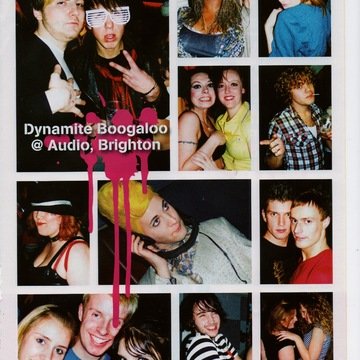
A paper flyer for 'Kitty Glitter Love The Knife' clubnight at Komedia basement on 20 Oct 2017
Kitty Glitter was a queer DJ collective running events in the early 2010s. Members went on to form Church of Italo in 2023.
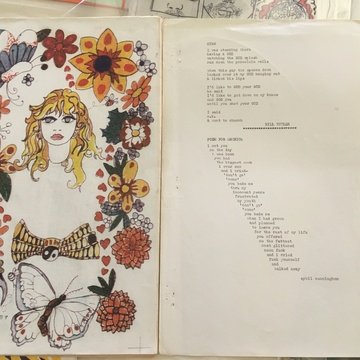
Latex Theatre was initiated as part of a sexual health project, in Leeds, in the early 90s. The group met weekly in the AIDS Advice Centre, and wrote collectively and individually.
1. A manuscript of a poem that Janet co-wrote in 1994 with her partner. The poem was read and performed on tour across the country.
2. A photograph of Janet and another member of Latex theatre performing a short piece at London Pride between 1993 and 1995.
The piece was short and punchy and delivered in an angry tone. Each of the sentences was made from tabloid newspaper headlines, and the homophobic language used around HIV/AIDS.
"AIDS, you're better off dead.
AIDS, a bullet in the head.
AIDS, you made your bed, lay on it"
3. Stupid Bastard: a sketch written by Janet Jones for Latex Theatre in 1993. The piece is a commentary on current legislation on AIDS, rape, MSM, the prison population, the age of consent, and drug use.